
The root of the current NAND shortage is not demand running alone — it is supply that never fully came back.
SanDisk said in October that its NAND capacity remains roughly 30% below the 2022 peak. The company retired about 560,000 wafers per month during the last industry downturn, and new capacity takes years from decision to volume output.
The gap shows up first in allocation: SK hynix has committed its NAND output through the end of 2026, and more than 75% of Micron's fiscal 2027 output is already locked under long-term agreements. SanDisk estimates that data centers have moved from about 30% of NAND demand last year to roughly half today.
Prices continue to track that gap. TrendForce forecasts — a projection, not a settled outcome — that NAND contract prices will rise a further 15–20% quarter over quarter in Q4 2026, with enterprise SSDs up 23–28%. Measured in capacity, enterprise SSD demand is set to grow more than 80% year over year in 2026, led by high-capacity QLC deployed for AI inference.
The squeeze is spreading into passives as well: lead times for Samsung Electro-Mechanics MLCCs have stretched to 52 weeks (Wanlian Securities, 26 October).
For buyers, certainty on allocation and long-term agreements now matters more than chasing a single price point.
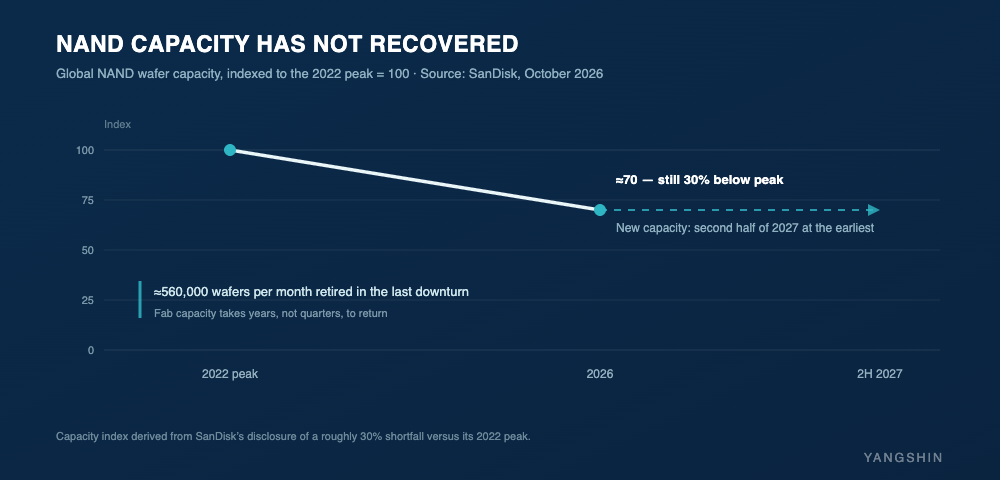
Figure 1: NAND wafer capacity remains about 30% below the 2022 peak (Source: SanDisk)
To judge where lead times go next, watch capacity coming back — not the price quote of the week.
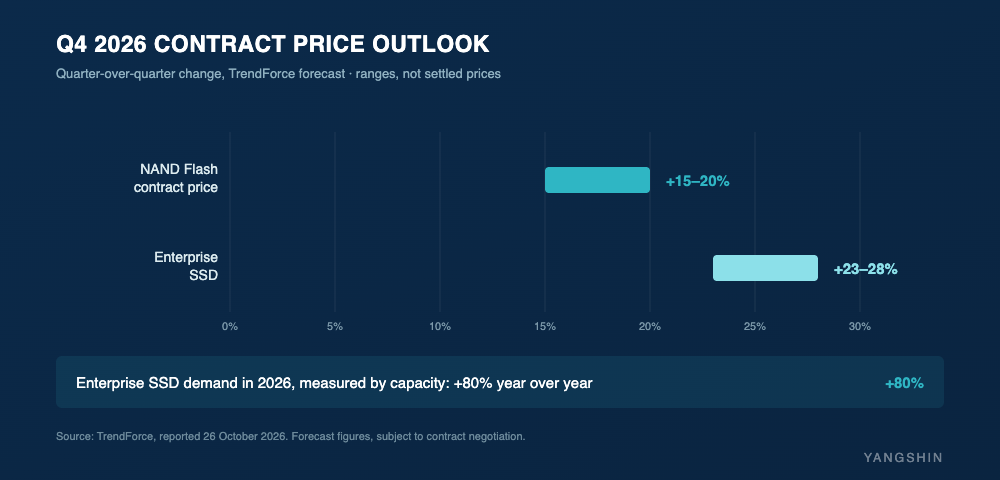
Figure 2: Q4 2026 contract price forecast for NAND and enterprise SSD (Source: TrendForce)
YANGSHIN Technology supports NAND, DRAM and passive component planning, allocation and lead times through three franchised lines: JC Semiconductor, Kangying Semiconductor and Youcun Technology.
Memory & Passive Component Distribution
For quotations and lead-time support, please contact the YANGSHIN Technology sales team at sales@yangshin.com

